
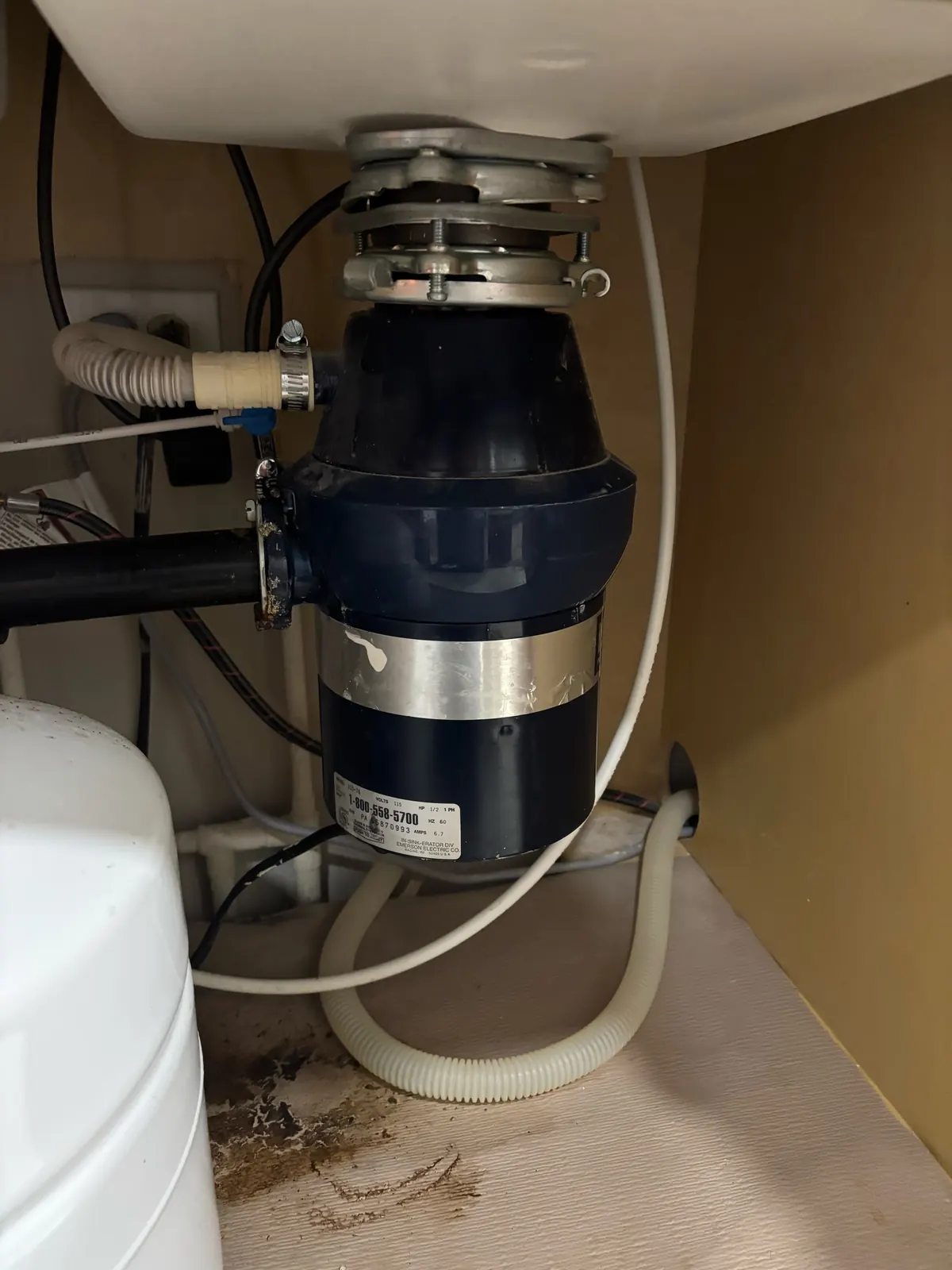
You flip the switch, the sink is full of cloudy water, and the disposal just hums at you. Or a slow drip under the cabinet keeps coming back no matter how often you wipe it up. Before you shop for a garbage disposal replacement, it helps to know which problems a quick reset can fix. Some symptoms, though, mean the unit is truly worn out. Here’s how to tell the two apart, plus how to size a new unit.
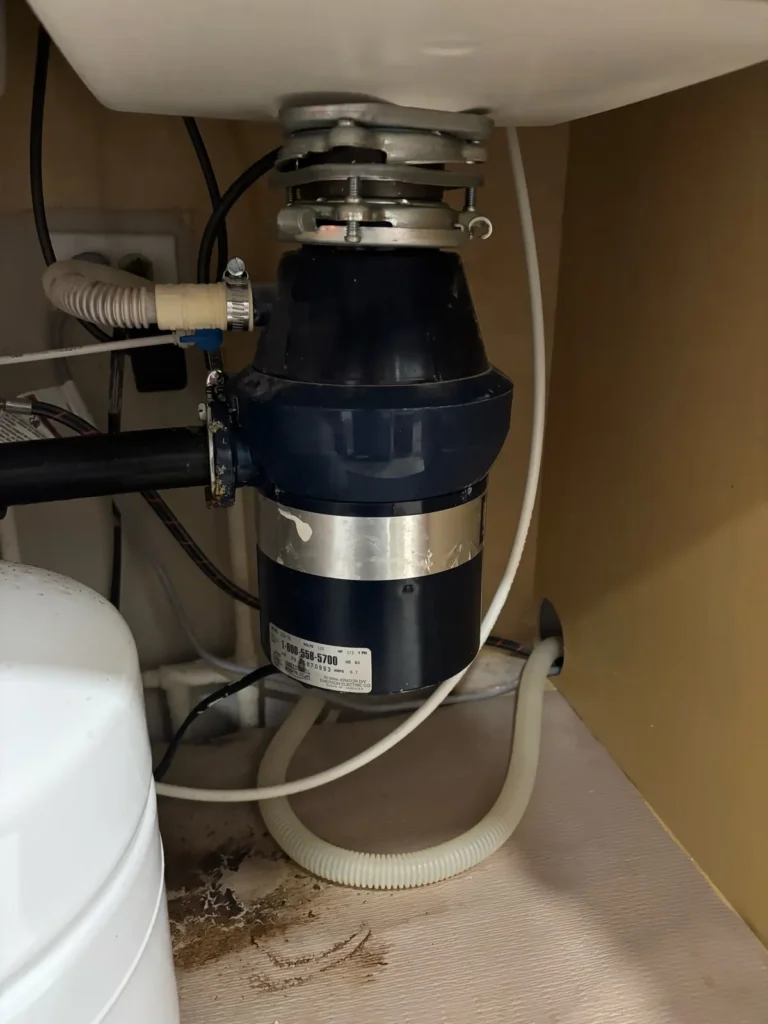
Signs it’s time for a new garbage disposal
These signs point to a worn-out unit, no matter how often you reset it:
- Water dripping from the body. A leak from the bottom or side of the housing usually means the seals inside have failed, and there’s no outside fix for that.
- Jams that keep coming back. One jam after a big dinner can happen to anyone. Jams every week, even with careful use, point to worn grinding parts.
- Humming after you clear the jam. If the plates turn freely by hand but the motor still only hums, the motor is likely failing.
- A reset button that keeps popping. That overload switch protects the motor. When it trips after every short run, the motor is struggling.
- Rust on the bottom of the unit. Rust or crust there often means it has been leaking for a while.
On the other hand, a few problems sound serious but often aren’t. For example, a leak at the top, where the disposal meets the sink, may only need fresh plumber’s putty or a tighter mount. Similarly, a drip where the drain pipe or dishwasher hose connects is often a loose clamp or a worn gasket. Bad smells usually mean old food is sitting in the chamber, not that the motor is dying.
Simple resets to try first
Start with safety. Turn the wall switch off, then unplug the disposal or switch off its breaker. Never put your hand inside the grinding chamber, even when the power is off. Instead, use tongs or pliers to pull out anything you can see, like a bottle cap or a fruit pit. Also, skip chemical drain cleaners. They can sit in the chamber and splash whoever works on it next.
If it hums but won’t spin
A hum means power is reaching the motor, but something is holding the plates still. Look under the unit for a small six-sided hole in the center. Many models take a 1/4 inch hex key there, and one often comes in the box. With the power off, work the key back and forth until it turns a full circle. That often frees the jam. Then restore power and test it with cold water running.
If it does nothing at all
Silence usually means no power. First, press the small reset button, often red, on the bottom of the unit. Next, check your breaker panel. If the disposal plugs in, test that outlet with a lamp. Then try the switch again. When the unit still won’t start, the switch or the motor could be the problem, and any wiring work belongs with a qualified electrician.
What if the disposal spins fine but the sink still drains slowly? In that case, the clog is probably further down the line, past the disposal. That calls for drain cleaning, not a new disposal.
Fix it or swap it? A simple way to decide
A new unit isn’t always the answer, so sort the problem first:
- Worth fixing: a jam, a tripped reset button, a loose drain connection or a leaking sink seal.
- Time for a new unit: the body leaks, the motor hums even with free plates, or rust and jams keep returning.
- Your call: the unit is old, loud and weak, and the cabinet is already open for another job.
Picture a landlord whose tenant calls the morning after a holiday dinner, with a full sink and a humming disposal. A hex key and tongs fix it. But if that same unit starts dripping from its base a month later, a garbage disposal replacement is the better call.
What goes in a garbage disposal and what stays out
How you use a disposal matters as much as which one you buy. Grease is the big one. The City of Phoenix warns that fats, oils and grease harden on sewer pipe walls, where they can narrow or fully block the pipe and cause sewer backups. A disposal doesn’t break grease down, and hot water won’t wash it away. Scottsdale’s sewer and grease tips point out that the grease still cools and hardens farther down the pipe.
So let cooking grease cool, pour it into a can, and put it in the trash once it sets. Then wipe greasy pans with a paper towel before you wash them. Scottsdale even suggests scraping plates into the trash and going easy on the disposal, since food scraps add to blockages. Those clogs aren’t always the city’s to fix. In Peoria and Scottsdale, for example, the sewer pipe from your house to the city main is yours to maintain.
Beyond grease, keep these out of the disposal:
- Stringy scraps like celery, corn husks and onion skins, which wrap around the parts
- Starchy foods like potato peels, rice and pasta, which turn into a thick paste
- Coffee grounds and eggshells, which settle into gritty sludge in the pipes
- Bones, fruit pits and shells, which are too hard to grind well
- Anything that isn’t food, like twist ties or bottle caps
Soft scraps in small amounts are fine. Run cold water before you start, and feed food in a little at a time. Then keep the water running for a few seconds after the grinding stops. That way, the scraps clear the drain line instead of settling in it.
Sizing and installation basics for garbage disposal replacement
Choosing the right garbage disposal size
Home disposals come in several motor sizes. For most households, a mid-size unit handles daily scraps fine. A bigger motor usually copes better with tough scraps, but it also takes up more room. Under a lot of sinks, that room is already shared with a reverse osmosis system or a water filter. So check the space from the sink bottom to the cabinet floor against the unit’s height on the box.
You’ll also pick between two styles. A continuous feed unit runs while the switch is on, and it’s the more common type. A batch feed unit runs only when its stopper locks in place. It’s a little slower, but nobody can reach in while it grinds.
What the swap involves
A typical garbage disposal replacement follows the same basic steps:
- Turn off the power at the breaker, and unplug the old unit.
- Disconnect the drain pipe and dishwasher hose, then twist the old unit off its mounting ring.
- Check the sink flange. If it leaked, reseal it with fresh plumber’s putty.
- Mount the new unit and line up its outlet with the drain pipe.
- Reconnect the drain and dishwasher hose, then run water and check every joint for drips.
A new unit may sit higher or lower than the old one, so the drain pipe sometimes needs adjusting. Mounts don’t always match between brands, so a new brand may need its own ring and sink flange. Many disposals also ship without a power cord, and some connect straight to the home’s wiring. If yours has no plug, leave that connection to a qualified electrician.
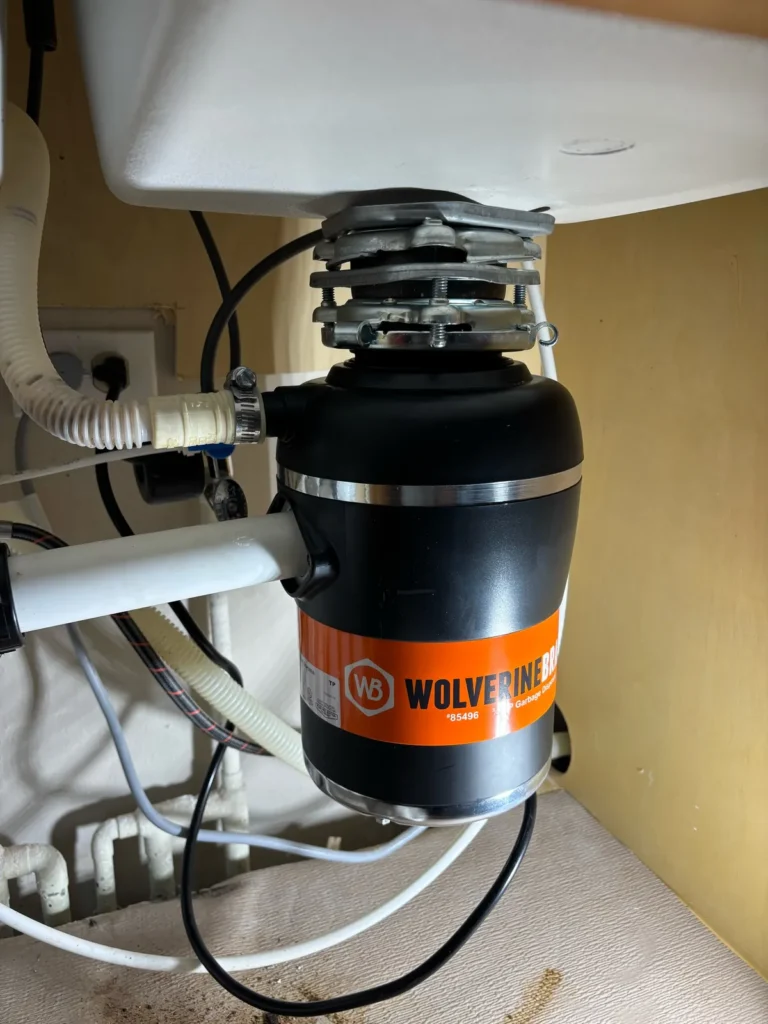
That’s the same sink after the swap. Notice the white drain pipe where the black one used to be. Geo redid the drain line along with the unit. This pair also appears in Geo’s job photo gallery. While the cabinet is empty, it’s a good time to test the shut-off valves, too. Our angle stop valve guide shows how.
Garbage disposal replacement questions, answered
Which parts of a garbage disposal replacement need a pro?
Swapping a plug-in unit is often within a homeowner’s reach. However, call for help if the drain lines don’t line up, the sink flange leaks, or the unit needs wiring.
Why won’t my dishwasher drain after a new disposal goes in?
New disposals usually come with a small plastic plug sealing the dishwasher inlet. You have to knock it out before you connect the hose, then fish the plug out of the chamber. Left in place, that plug blocks the dishwasher’s drain water.
When you’d rather hand it off
Some days you just want the sink working again. Geo can check whether your disposal needs a reset, a new seal or a full swap. Disposals fall under our faucet, sink and disposal work. If the hex key and reset button didn’t do it, pick a time on our online schedule.