
Maybe you’re tired of hauling cases of bottled water home from the store. Or maybe your tap water has that musty taste some Phoenix households notice in late summer. Either way, you’ve probably wondered if a reverse osmosis system under the kitchen sink is worth it.
RO is a common question at Valley kitchen sinks, and the answer depends on what you want from your water. This guide covers what RO removes, how it stacks up against a softener, and what upkeep it needs.
How a reverse osmosis system works
Reverse osmosis uses your home’s water pressure to push water through a very fine membrane. That splits the water into two streams. One is treated water for drinking. The other is reject water, which carries what the membrane caught down the drain.
Most under-sink units tap one cold water line and feed one small faucet. In a typical setup, water moves through these parts in order:
- A sediment filter that catches sand, rust and grit.
- A carbon filter that takes out chlorine and odors before the water reaches the membrane.
- The RO membrane itself, which does the fine filtering.
- A small storage tank, because the membrane works slowly.
- A final carbon filter that polishes the taste on the way to the faucet.
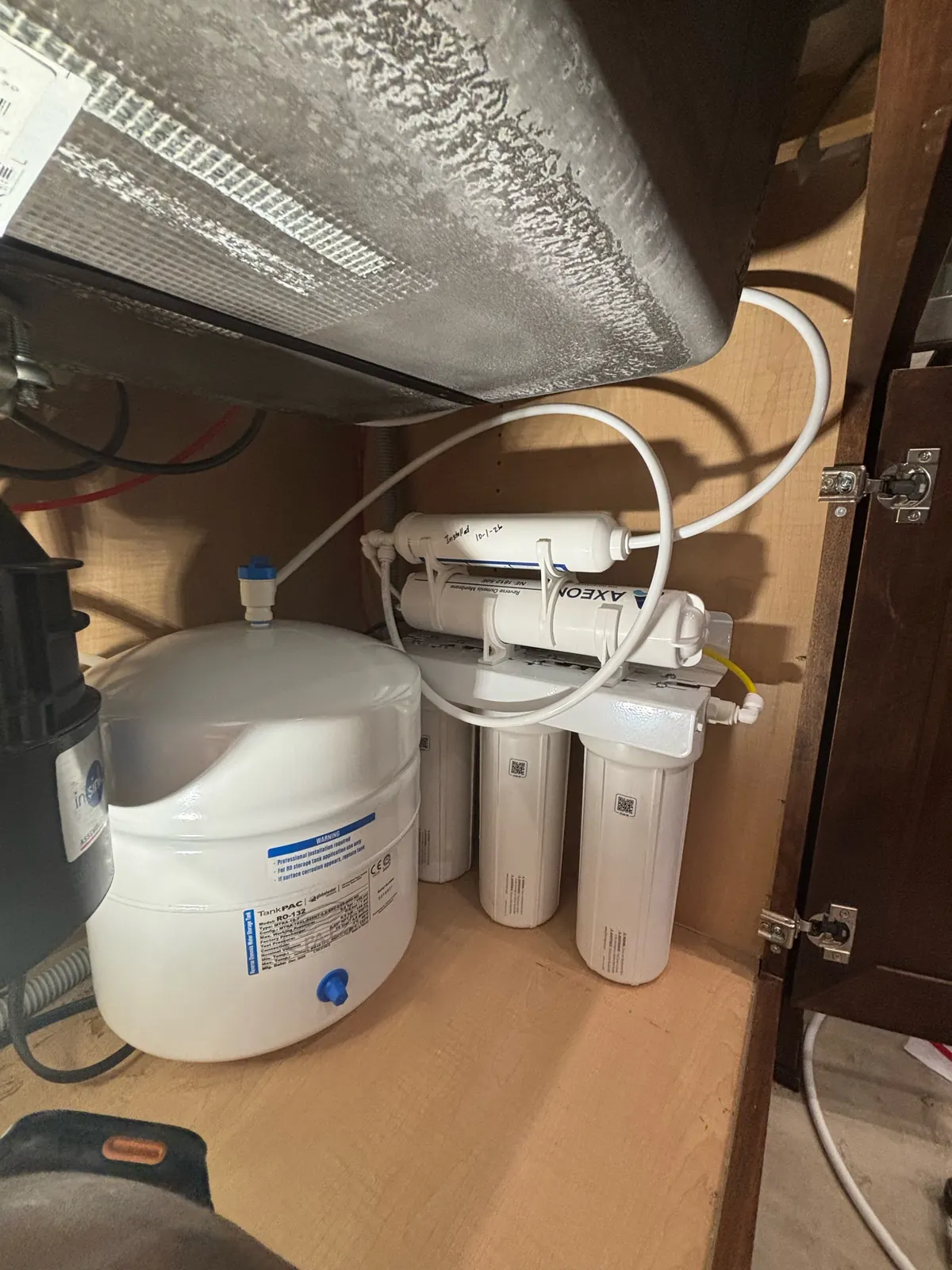
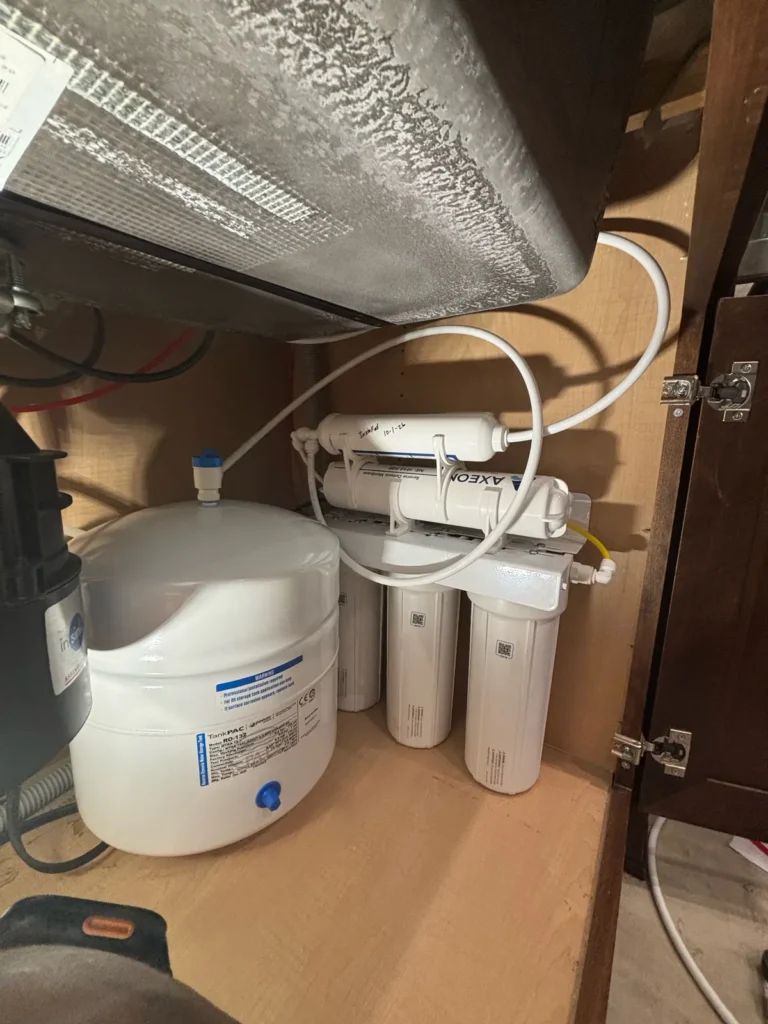
The photo above shows a common layout. Three filter housings hang from a bracket, with the membrane and a small inline filter on top and the tank beside them. It takes real floor space, so measure your cabinet first, especially if a garbage disposal already hangs there.
What reverse osmosis removes, and what it doesn’t
According to the EPA WaterSense program, these units can potentially remove lead, arsenic, PFAS, volatile organic compounds, bacteria and viruses. Labeled models must also meet a baseline for cutting total dissolved solids, the minerals and salts in tap water.
Still, models differ. A WaterSense labeled unit has to be tested for any extra contaminants its maker claims, so check the spec sheet for the problem you care about.
What your Phoenix water report tells you
Before you shop, pull up the City of Phoenix 2025 Water Quality Report. It lists total dissolved solids of 464 to 716 ppm. The report shows an EPA guideline of 500 ppm for TDS. That guideline isn’t enforceable, and the report groups it with aesthetic qualities, not health limits.
The report also notes that taste, odor and hardness aren’t regulated under health standards. In addition, algae in the canals can leave a musty taste and odor in late summer and fall. So for many homes, RO is about taste and convenience. Glendale’s 2025 report says it plainly: home treatment systems aren’t necessary for safe drinking water.
What RO won’t do for you
- Protect the rest of the house. It treats one tap, so your showers, water heater and fixtures still get hard water.
- Taste like your old tap water. Cutting dissolved minerals is the point, so expect a different taste. Some people love it, and some don’t.
- Replace a water test. If you have a specific worry, like lead from old plumbing, test first so you know what you’re treating.
Reverse osmosis versus a water softener
People mix these two up, but they do different jobs. A water softener treats the water for the whole house. It swaps the calcium and magnesium in hard water for sodium, which helps protect pipes, water heaters and fixtures from scale. We cover Valley water hardness, and how softeners work, in a separate article.
An RO unit, on the other hand, only treats the water at one faucet. It’s about what you drink and cook with, not your plumbing. In fact, some homes have both, with the softener protecting the house and the RO tap supplying drinking water. Our water treatment page shows how the pieces fit together.
If taste is your only complaint, though, you might skip both. The EPA says that in some cases, filtration that uses little or no water is enough. For instance, a carbon pitcher or faucet filter might solve it, so it’s worth trying one first.
The wasted water question
This is the trade-off people rarely hear about at the store. A typical under-sink unit sends five gallons or more down the drain for every gallon of treated water, according to the EPA. Some inefficient models send up to 10. In a desert city, that adds up fast.
So before you buy a reverse osmosis system, look for the WaterSense label. Labeled models send 2.3 gallons or less to the drain for each gallon they make, and the EPA says they treat water just as well. It also estimates that picking a labeled model over a typical one saves more than 3,100 gallons a year on average.
That reject water shows up on your meter, too. AMWUA’s Smart Home Water Guide lists RO among the normal uses to rule out before you hunt for a hidden leak. Also, listen to the unit now and then. If water keeps trickling into the drain long after the tank should be full, something inside may not be shutting off, so have it checked.
Keeping the filters and membrane fresh
A reverse osmosis system isn’t something you install and forget. Phoenix’s water report warns that skipping the maker’s instructions for running and maintaining a home treatment system can result in potentially unsafe water. The Water Quality Association also advises following the maker’s schedule, because the membrane and the filters before and after it need periodic replacement.
WQA says point-of-use carbon cartridges are typically swapped once or twice a year. It gives no set interval for the membrane, so go by the manual. The EPA does require labeled units to have a membrane that lasts at least a year.
Here’s a routine you can likely handle yourself:
- Write the install date on each filter. The small inline filter in the photo above has its date written right on it.
- Set a phone reminder based on the maker’s schedule, not a guess.
- Before you change anything, shut off the small supply valve that feeds the unit and close the valve on top of the tank.
- Next, open the RO faucet to release pressure, with a towel and a small bucket handy.
- Once the new filters are in, follow the maker’s steps for flushing the unit before you drink from it.
Watch for signs it’s due sooner. The faucet slows to a trickle, the tank takes ages to refill, or the old taste comes back.
Where the RO faucet goes
An RO unit gets its own small faucet, usually next to the main kitchen faucet. Many sinks have a spare hole for a soap pump or sprayer, which is often the easiest spot. With an undermount sink like the one below, the faucet goes through the countertop instead, and stone takes careful drilling.
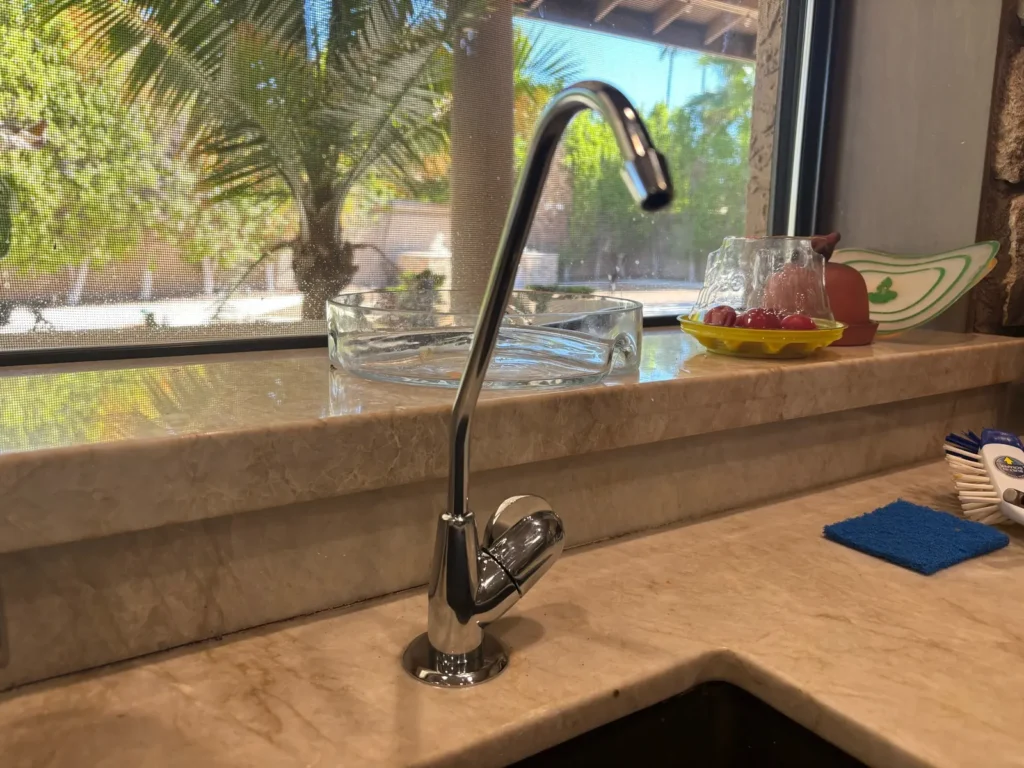
That faucet can start to drip over the years, like any other. Often it’s a small fix, and we handle it along with other faucet and fixture repairs.
How to decide if a reverse osmosis system is worth it
Run through these questions before you buy:
- Do you buy or haul bottled water every week? RO can save trips and plastic.
- Is there a specific contaminant you want to reduce? Check that the model was tested for it.
- Is there room under the sink, or do the disposal and trash can crowd it?
- Will you keep up with filter changes? A neglected unit isn’t doing its job.
- Does the reject water bother you? If so, pick a WaterSense labeled model or stick with a carbon filter.
For example, a retired couple who refill gallon jugs at a water store twice a week might find an RO tap a real upgrade. On the other hand, a renter who mainly dislikes the chlorine smell might be happier with a pitcher filter and no install at all.
RO install and faucet questions
Do I need a plumber to put in a reverse osmosis system?
Not always. Many kits use push fittings, and some homeowners install their own. Still, you’ll be tapping a cold water line, a drain and maybe your countertop. Shut off the water first, and never touch the disposal’s electrical connections. If any step feels unsure, call a qualified plumber.
Why does the RO faucet run so slowly?
A slower stream is normal, since the membrane works slowly. It won’t affect pressure elsewhere, because RO only feeds its own faucet. A sudden drop to a trickle, though, often means the filters are due.
Want better water at the kitchen tap?
If you’re on the fence, Geo can look under your sink, hear what bugs you about your water and give you a clear read on whether RO fits. Sometimes the answer is just a pitcher filter. To get started, reserve a time online or send us a message with your questions.