
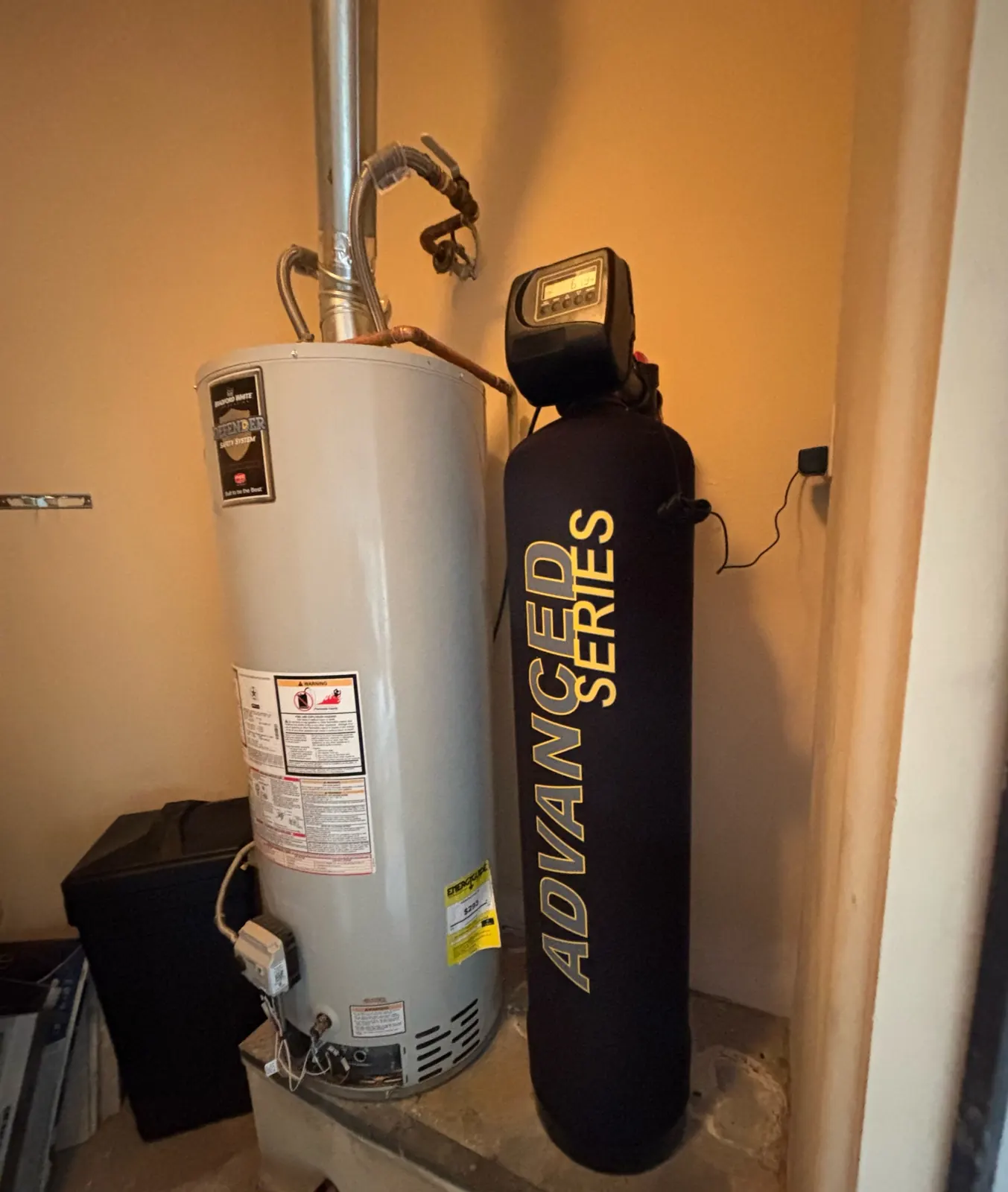
If your shower glass turns cloudy a week after you clean it, or your faucets wear a white crust, you already know the problem. Phoenix hard water carries a heavy load of dissolved minerals, and those minerals don’t stay in the water. They settle out as scale inside your water heater, your fixtures and the fittings under your sinks. Here’s how hard the water really is, where scale does damage, and which fixes are worth it.
How hard is Phoenix water?
The City of Phoenix 2025 Water Quality Report lists total hardness between 172 and 302 milligrams per liter (mg/L). That works out to about 10 to 17.6 grains per gallon (gpg). The hardness comes from calcium and magnesium that the water picks up from soils. The report gives one citywide range, so your own tap could sit anywhere inside it.
On the Water Quality Association’s hardness scale, water is hard at 7 to 10.5 gpg and very hard above 10.5 gpg. In other words, Phoenix water starts at the top of the hard band, and most of its range is very hard. If your report only shows mg/L, divide by 17.1 to get grains per gallon.
Nearby cities land in the same ballpark. Tempe’s 2025 report averages about 12.3 gpg, and Mesa’s zones average roughly 12 to 16. Even so, the number can shift across town. Peoria says its treatment plants average about 13 to 17 gpg, while its wells run closer to 2 to 8. So wherever you live in the Valley cities we serve, check your own city’s yearly report before you buy equipment.
What Phoenix water does to your water heater
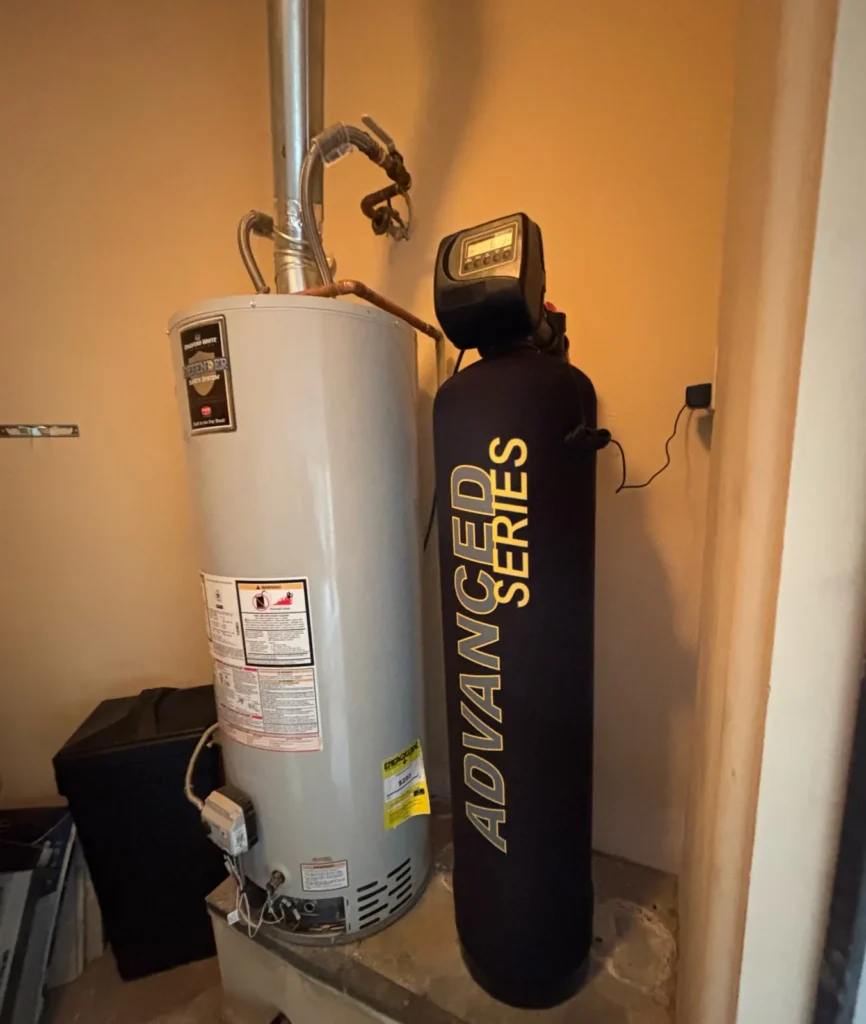
Your water heater takes the worst of it. The Phoenix report itself says hardness can cause scaling in water heaters. In a gas tank, much of that scale settles on the bottom, right over the burner. A lab study by Battelle, paid for by the water treatment industry, found scale built up far faster on hard water than on softened water. Gas units on hard water also lost efficiency, so they burned more fuel for the same hot water.
Electric tanks have their own weak spot. Scale coats the heating elements, and the same study said those elements would be expected to wear out sooner on hard water. Tankless heaters are even touchier. U.S. Department of Energy guidance on tankless heaters warns that hard water will damage them. It also notes that some makers may require a softener once hardness passes about 8 to 14 gpg. Phoenix’s range of 10 to 17.6 gpg sits inside or above that window.
The same DOE guide says tank heaters typically last 10 to 15 years, and tankless units up to about 20. Those are typical ranges, not promises, and both hard water and upkeep affect where yours lands. If your heater is noisy, slow to heat or damp at the base, our page on water heater repair and replacement lists the warning signs we look for.
Scale on faucets, fixtures and fittings
In the rest of the house, scale shows up in smaller ways. Faucet aerators and showerheads clog, so the flow turns weak or sprays sideways. Battelle’s tests found the same pattern: low-flow showerheads and faucets on hard water clogged, while those on softened water had no problems.
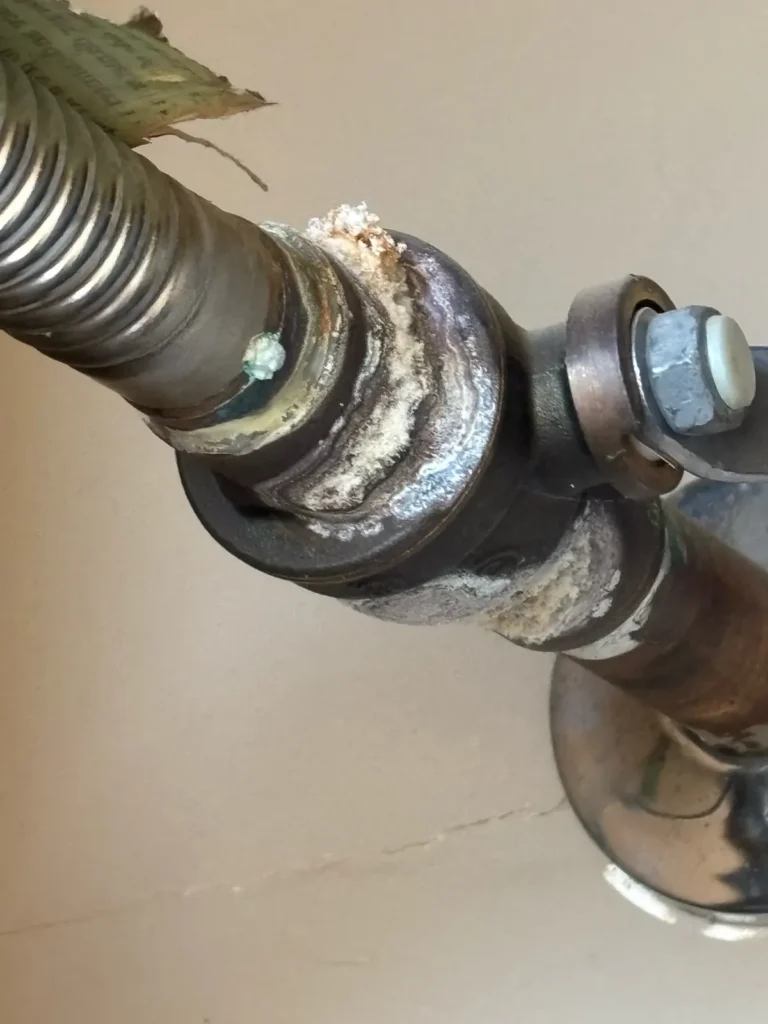
Then there are the valves and fittings under sinks and behind toilets. Crust like the white buildup in this photo, which Geo found during an inspection, often grows where a tiny seep keeps wetting the metal. Each time the water dries, the minerals stay behind. The green spots are corrosion. A valve in this shape may be leaking slowly, and it may not close when you need it. For more real repairs, browse photos of finished jobs.
Here’s a quick check for this weekend:
- Open the cabinet under each sink and look for white or green crust on valves and supply lines.
- Feel each connection with a dry fingertip, since dampness usually points to a slow leak.
- Unscrew a faucet aerator and see whether the screen is packed with grit.
- Listen to your water heater during a long shower for popping or rumbling.
- Finally, look around the base of the heater for rust, crust or damp spots.
If you find a damp, crusty fitting, don’t crank on it with a wrench, because old fittings can crack. Instead, make sure you know how to close your main shutoff, then call a qualified plumber if you’re unsure what you’re looking at.
Fixes for hard water in Phoenix
There’s no single right fix for Phoenix hard water. The best choice depends on how long you plan to stay, what kind of water heater you have, and how much the spots and crust bother you. Here are three paths worth weighing.
A water softener
A traditional softener swaps calcium and magnesium for sodium as water passes through a tank of resin beads. Every so often, it rinses the resin with salty water from the brine tank. This is the only option here that actually removes hardness.
First, set the softener to your city’s hardness number. Mesa, for example, tells its customers to start at 16 gpg and adjust. Next, ask for a metered model that regenerates based on the water you use, not on a timer, because that saves salt and water. Also, keep your drip irrigation and outdoor hose bibs on unsoftened water when the plumbing allows it. Your plants don’t need the extra sodium.
On the downside, a softener needs salt, takes up floor space and uses some water each time it regenerates. Mesa also notes that softening adds about 8 mg/L of sodium for every grain of hardness it removes. At 15 gpg, for instance, that math works out to about 120 mg/L of added sodium. If you watch your sodium, check with your doctor and think about a separate drinking water tap. Reverse osmosis at the kitchen sink is one common choice.
A salt-free conditioner
Salt-free conditioners don’t take the minerals out. Instead, their makers say the units change how the minerals behave, so less scale sticks to surfaces. Because the hardness stays in the water, a test strip will read about the same afterward. On the plus side, there’s no salt to add and no extra sodium. Still, how well they work can vary. So check your heater’s manual first, especially if you have a tankless unit.
Maintenance without treatment
You may not need any equipment at all. If you rent, plan to move in a few years or have a newer tank heater, steady upkeep can be enough. That means flushing the heater on its manual’s schedule, cleaning aerators and replacing crusty valves before they fail. For tankless units, the DOE guide says makers recommend flushing anywhere from twice a year to once every three years, depending on the model, use and water quality.
A simple hard water routine
Whichever path you pick, keep up a simple routine:
- Every month, if you have a softener, check the salt and add more when the brine tank is less than half full.
- When the flow drops, soak aerators and showerheads in white vinegar for about an hour, then rinse and reinstall them.
- Twice a year, repeat the quick check above.
- On the schedule in your manual, flush the water heater. Turn the gas control to off or shut the breaker first, close the cold water valve and let the water cool so you don’t get scalded.
- Leave gas lines and wiring alone. That part is a job for a pro.
Phoenix hard water FAQ
How do I find out how hard my water is?
Start with your city’s yearly water quality report and look for the hardness line. Home test strips also work when you want a reading at your own tap.
Can a softener cause low water pressure?
It can, especially when it’s overdue for service. Low pressure has several other possible causes, though. Our article on checking your home’s water pressure walks through them and shows how to take a gauge reading.
Getting ahead of hard water in Phoenix
Hard water is a fact of life here, but much of its damage builds slowly, which gives you time to catch it. Start with the quick check above, then pick the path that fits your home. Geo has spent the last 3 of his 12-plus years in plumbing working on Valley homes. He can look over your heater, valves and fixtures, then tell you plainly which path makes sense. Sometimes that means no new equipment at all. Our page on water softener and filtration work has more detail, and you can choose a visit time online whenever you’re ready.