
The sink drain trap is the only part of your sink’s drain that holds water on purpose. That curved pipe dips down and back up below the basin. Its joints can also loosen or crack, and a dry trap lets sewer smells through. If your cabinet is damp or the sink smells off, the steps below will help you find the cause.
How a sink drain trap blocks sewer gas
The U-shaped bend holds a small pool of water after every use. That water forms a seal, so sewer gas from the drain line can’t drift back up into your home. When you run the faucet, water flows straight through, and then the bend refills.
Every sink drain trap works the same way, whether it sits under a kitchen basin or a bathroom vanity. Because the seal is only water, though, it can disappear. A sewer district guide to P-traps notes that water in a rarely used trap slowly evaporates, and hot or dry weather speeds that up. Phoenix has plenty of both. So run water in a guest bath sink at least once a month, and in every sink, tub and shower after a summer away.
The parts under your sink
- Tailpiece: the straight pipe that drops from the sink strainer or the disposal outlet.
- J-bend: the U-shaped piece that holds the water.
- Trap arm: the sideways pipe that runs from the J-bend into the wall.
- Slip nuts and washers: the large nuts at each joint. A tapered washer inside each nut makes the seal.
Where trap leaks usually start
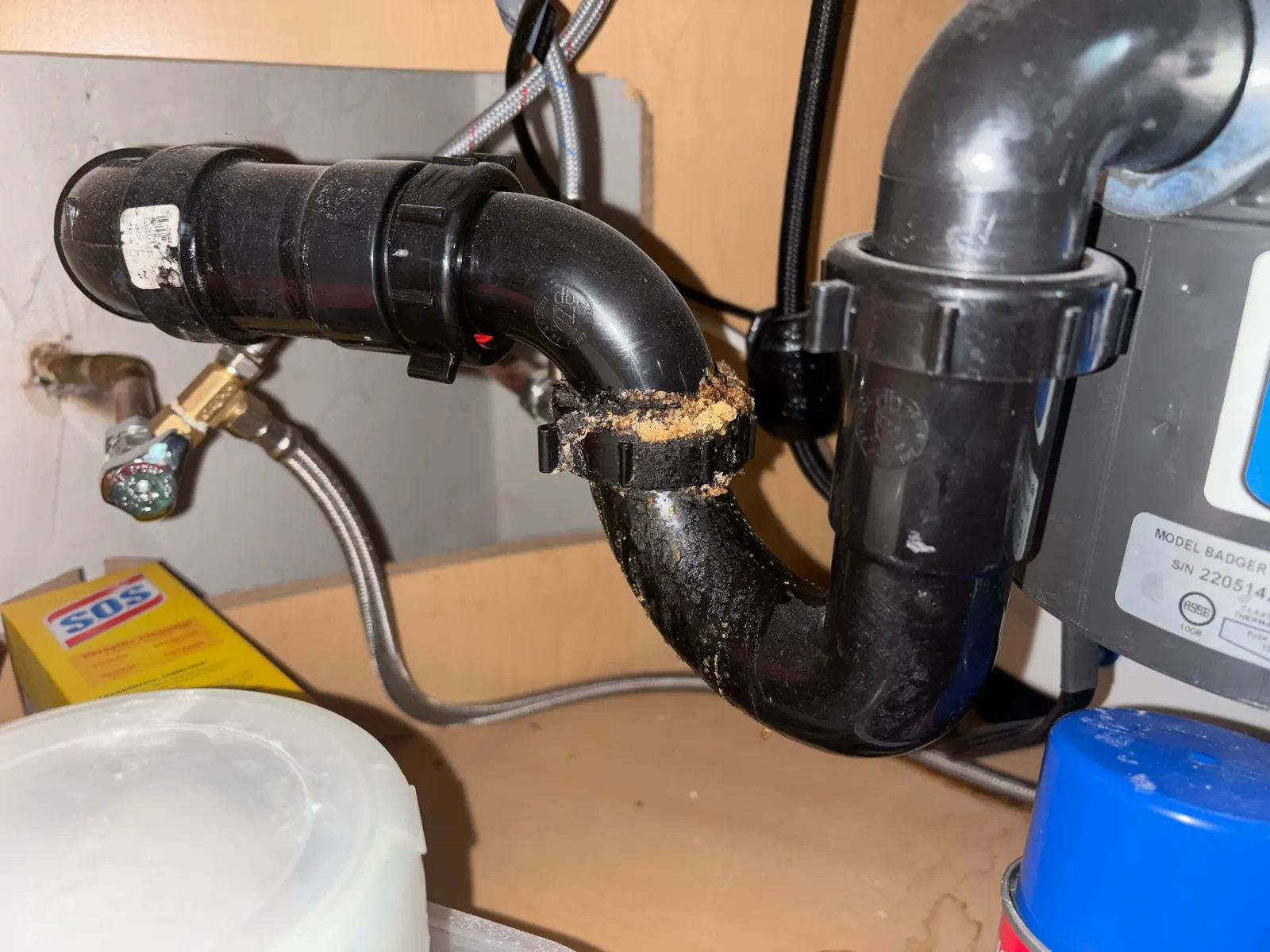
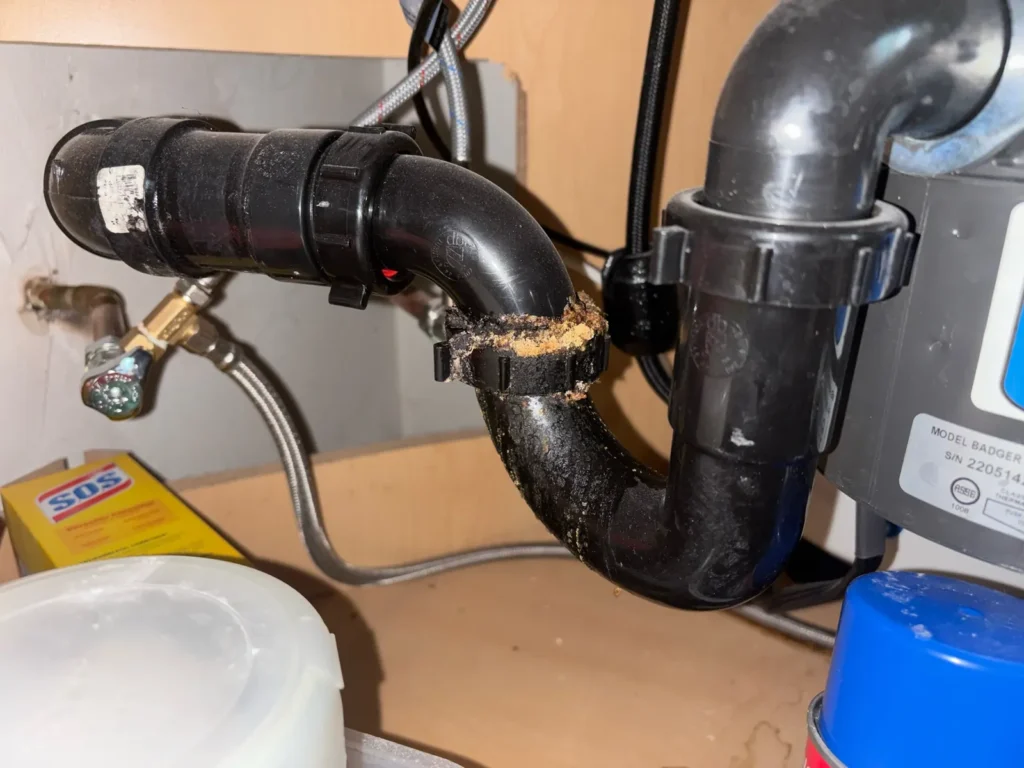
Slip joints are the usual weak spot. They seal with pressure from the nut, not glue, so they can work loose. For example, a bin of cleaning supplies that bumps the J-bend can shift it just enough to drip. Washers also flatten and harden with age, and a nut that went on crooked won’t seal well.
Cracks are the other common cause. Plastic slip nuts can split when someone cranks them with big pliers, and a hairline crack may only weep while the sink drains. Chrome-plated metal traps, common in older homes, corrode from the inside instead. So they can look fine and still have pinholes along the bottom of the bend.
Before you blame the trap, check everything above it. Drips can also start at the strainer, the supply lines, the shut-off valves or the disposal. Water runs down the outside of the pipes and collects at the lowest point, often the bottom of the trap. So a wet trap doesn’t prove the trap is leaking.
Find the drip with a paper towel test
- Clear out the cabinet and dry every pipe and joint with a towel.
- Wrap a dry paper towel around each joint, or lay one flat under it.
- Fill the sink a few inches deep, then pull the stopper and let it empty.
- Check each towel. The first wet spot shows you where the leak starts.
Watch the timing, too. Wet towels while the faucet runs point to the faucet or its hoses. A leak that shows up only as the sink empties is on the drain side. A drip with everything off points to a supply line or shut-off valve. For that kind of leak, the AMWUA Smart Home Water Guide explains a simple water meter check. A drain leak won’t show up on the meter, though, since a drain only leaks while water goes down it.
Should you tighten or replace the sink trap?
First, make the space safe. If the sink has a disposal, turn it off at the wall switch and unplug it if it has a plug. Never touch the wiring. Then set a bucket under the trap, and don’t run the faucet or the dishwasher, which usually drains through these same pipes.
When snugging a nut is enough
If the drip comes from a slip joint and the parts look clean and whole, start by tightening. Turn the nut by hand until it’s snug, then give it about a quarter turn more. Plastic nuts rarely need a tool, and too much force can crack them. Next, run water and check your paper towel again.
Still dripping? Then loosen the nut and look at the washer. It should sit square on the pipe, with the tapered side facing into the fitting and away from the nut. Replace any washer that’s flat, torn or rock hard, and bring the old one along to match the size. Skip the tape and putty, too, because the washer does the sealing.
When the trap needs replacing
Replace the trap, or at least the J-bend, when you see any of these signs:
- A crack in the bend or in a slip nut
- Heavy crust or corrosion that keeps a nut from threading smoothly
- A metal trap with rust spots, thin walls or pinholes
- A joint that only stops leaking when you crank it hard
- Mismatched parts from an old repair that never lined up
A new sink drain trap is a standard hardware store part, and kits usually include fresh nuts and washers. Kitchen and bathroom traps come in different sizes, so match the package to your old J-bend. Both photos come from a kitchen sink Geo worked on, where a crusted slip joint had been leaking.
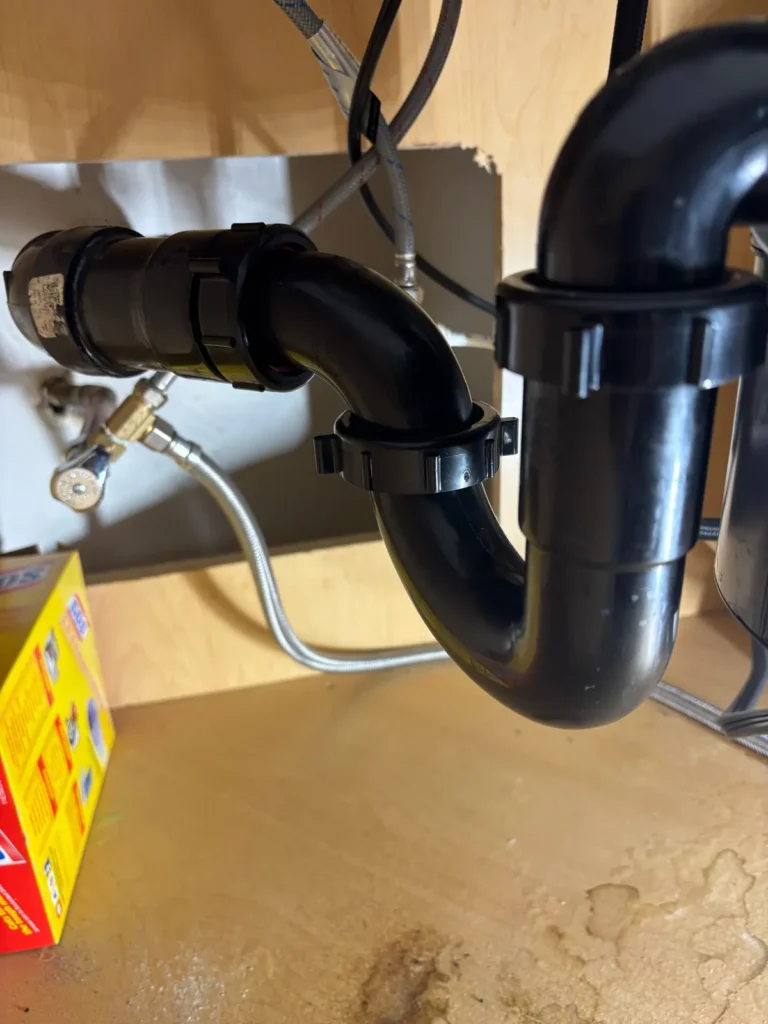
A leak at a glued joint, the threaded wall adapter or a pipe inside the wall needs more than a wrench. That’s the kind of fix we handle through our home plumbing repair service.
Is the clog in the trap or further down the drain?
The bend is a natural catch point. Hair, food scraps, coffee grounds and grease settle in the sink drain trap first. So when one sink runs slowly and every other fixture works fine, start with the trap. On the other hand, several slow drains at once point to a clog further down the line. A toilet that gurgles when the sink empties is another clue.
How to clean out a sink trap
- Turn off the disposal, if you have one, and set a bucket under the trap.
- Loosen both slip nuts on the J-bend by hand. If they won’t budge, use slip joint pliers gently.
- Lower the J-bend slowly, because it’s full of dirty water.
- Empty it, then scrub the inside with an old brush.
- Put the J-bend back, snug the nuts, and run water to test for leaks.
One caution: never open a trap after pouring in a chemical drain cleaner. The water inside can splash and burn your skin or eyes, so tell your plumber if you’ve already used one. If the trap comes out clean and the sink still runs slowly, the blockage is likely in the trap arm or the pipe in the wall. That’s a job for a drain cable and our drain cleaning service.
Grease, disposals and your kitchen drain
Kitchen drains face a problem bathroom drains rarely see, and that’s grease. Even a thin film of bacon fat turns waxy once it cools in the bend. The City of Phoenix calls fats, oils and grease a leading cause of sewer backups, because the buildup can restrict or completely block pipes.
Your trap is the first bend that grease meets. So if a kitchen trap clogs again and again, look at what goes down the sink before you blame the pipes. Running a disposal won’t help either, since its ground scraps still pass through the trap and can stick to any grease inside. Our guide to replacing a worn garbage disposal lists what to keep out of it.
Sink drain trap questions
Why does my sink smell like sewer gas?
If the sink rarely gets used, the trap has probably dried out, so run water for a few seconds to refill it. If the odor comes back quickly, a loose joint, a cracked trap or a vent problem may be letting gas through. A vent issue calls for a plumber.
Is a dripping sink drain trap an emergency?
In most cases, no. Stop using that sink, keep a bucket under the trap and dry the cabinet so the wood doesn’t swell. However, water that keeps coming when the faucet is off means a supply leak. In that case, close the shut-off valves under the sink right away.
Get help with a stubborn trap or drain
Most sink drain trap leaks come down to a loose nut, a tired washer or a cracked J-bend. You can often handle those yourself with a bucket and a new part or two. That said, a glued joint, a corroded wall fitting or a clog past the trap is a different job. Geo won’t push a new trap when a fresh washer will do. His repair photos show the kind of work he takes on. If your trap needs more than a quarter turn, request a time on the booking page. He’ll look for the source of the drip.