
That brass valve with the dark cap, standing on a pipe beside your house, has one quiet job. It keeps yard water out of your drinking water. It’s called an irrigation backflow preventer, and in the Valley it bakes in the sun all summer, then sits out on the odd freezing night. So when it starts to drip, spit or crust over, it’s hard to know if you need a small fix or a new one. Read on for how it works, what Arizona’s rules mean for homes, and the clues that yours is worn out.
What an irrigation backflow preventer actually does
Normally, water flows one way. It moves from the city main, through your meter, out to the sprinkler valves and into the yard. Backflow is when that flow reverses. For example, a water main break down the street can make pressure in the city line drop fast. When that happens, the main can act like a straw and pull water back out of your sprinkler pipes.
That water isn’t clean, though. Sprinkler heads and drip lines sit in soil, puddles, fertilizer, weed killer and whatever the dog left behind. That’s why the plumbing code requires backflow protection on lawn sprinkler and irrigation systems. The device on your riser is that protection. In short, it lets water out to the yard but won’t let it come back.
The pressure vacuum breaker on many Valley homes
On a lot of homes here, the device is a pressure vacuum breaker, or PVB. You’ll know it by the round cap on top, two small test ports on the side, and a shutoff valve on each end. Inside, a spring-loaded check valve keeps water moving one way. Meanwhile, an air inlet under the cap pops open if pressure drops. That breaks the suction before dirty water can climb back toward the house.
A PVB has limits, however. Phoenix’s backflow administrative requirements list PVBs for irrigation systems that aren’t subject to backpressure. In plain terms, a PVB guards against suction from the street. It doesn’t stop something pushing water back into your lines, like a pump. The same list calls for a stronger reduced pressure (RP) assembly if the system uses a chemical injector, such as a fertilizer feeder, or if any part of the system isn’t at least 6 inches lower than the PVB. Because a PVB works by letting air in, it has to stand higher than the pipes and heads it feeds. That’s why it sits up on a riser instead of hiding in a valve box.
Do you have to test a backflow preventer every year?
If you live in a single-family home, usually not. Arizona’s state backflow prevention rule exempts single-family homes used only as residences, unless a specific cross-connection problem turns up. Phoenix’s own rules carry the same exemption. The yearly test you may have heard about applies to assemblies that a water provider requires. In Phoenix, those get a test when they’re installed or repaired, then at least once a year after that.
That said, the rules aren’t the same everywhere in the Valley. Mesa requires assemblies on homes with dedicated landscape meters, and Tempe’s code requires yearly testing of the backflow assemblies it covers. Peoria mainly enforces its program on commercial properties, but it still recommends yearly testing for home devices. So before you assume you’re exempt, check your city’s backflow page or call its water department.
Even if no one asks you to test it, your irrigation backflow preventer still deserves a look each season. After all, a failing device can’t protect anything.
When a backflow preventer starts to wear out
Most problems with an irrigation backflow preventer show up while the sprinklers run. So pick a morning, start a zone by hand, and watch it for a few minutes. Here’s what to look for:
- Water spitting or dripping from the cap. A short spurt as the zone kicks on can be normal, because the air inlet takes a second to seal. However, a steady drip or spray while it runs usually means a worn seal or air inlet.
- Leaks at the test ports or handles. These small fittings have seals that dry out over time.
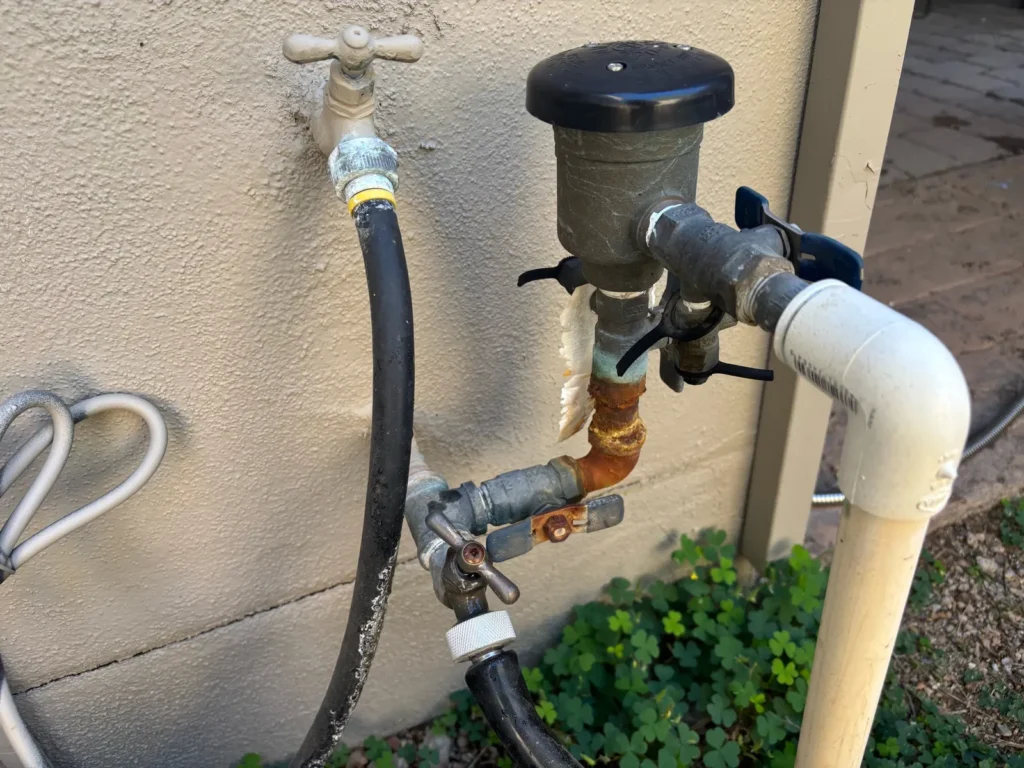
- Green or white crust and rust. Corrosion on the body, the fittings or the copper riser below means water has been seeping for a while.
- A cracked body or split cap. This often follows a hard freeze. A split cap can sometimes be swapped on its own, but a cracked body can’t be patched.
- Weak sprinklers on every zone. Sometimes a stuck check valve or a half-closed shutoff is choking the flow.
- Wet ground or a higher bill with the system off. In that case, a leak in the irrigation line may be hiding underground.
If you suspect a hidden leak, switch the sprinkler controller off and close every tap in the house, then watch the small leak indicator on your water meter. If it still moves, water is escaping somewhere, maybe from a buried irrigation line. Tracing a leak underground is part of our hidden leak detection work.
One more clue: if sprinkler heads mist, or pipes bang when zones shut off, that points to pressure more than backflow. Our guide to the water pressure regulator covers that side.
How desert sun and winter freezes take a toll
An irrigation backflow preventer in Phoenix lives a rough life. The city’s household plumbing tips say exposed pipes, especially PVC, are more prone to leaks and breaks. They also note that our summer heat takes a toll on exposed plumbing, not just the occasional freeze. So each spring, look over the plastic cap and any bare PVC on the riser. If they look chalky, faded or cracked, have them replaced before a bump with a rake finishes the job.
Winter brings the opposite problem. Phoenix only freezes now and then, but a PVB holds water in its brass body. When that water freezes, it expands and can crack the body or damage the parts under the cap.
On a night with a freeze warning, wrap the device and the bare pipe with an insulated cover. An old towel inside a plastic bag works in a pinch. Next, disconnect and drain any hose nearby, as the city suggests. Then uncover it once the day warms up.
Repair kit or full replacement?
Not every leaky PVB has to go. If the body is sound and the drip comes from the cap, a rebuild kit with a new poppet and seals often stops it. In fact, that’s a far smaller job than a full swap.
On the other hand, replacement makes more sense in these cases:
- The body is cracked, often after a freeze.
- Corrosion has eaten into the threads, fittings or the pipe below.
- Shutoff valves are seized, or the test ports won’t seal.
- An older unit would need several new parts at once.
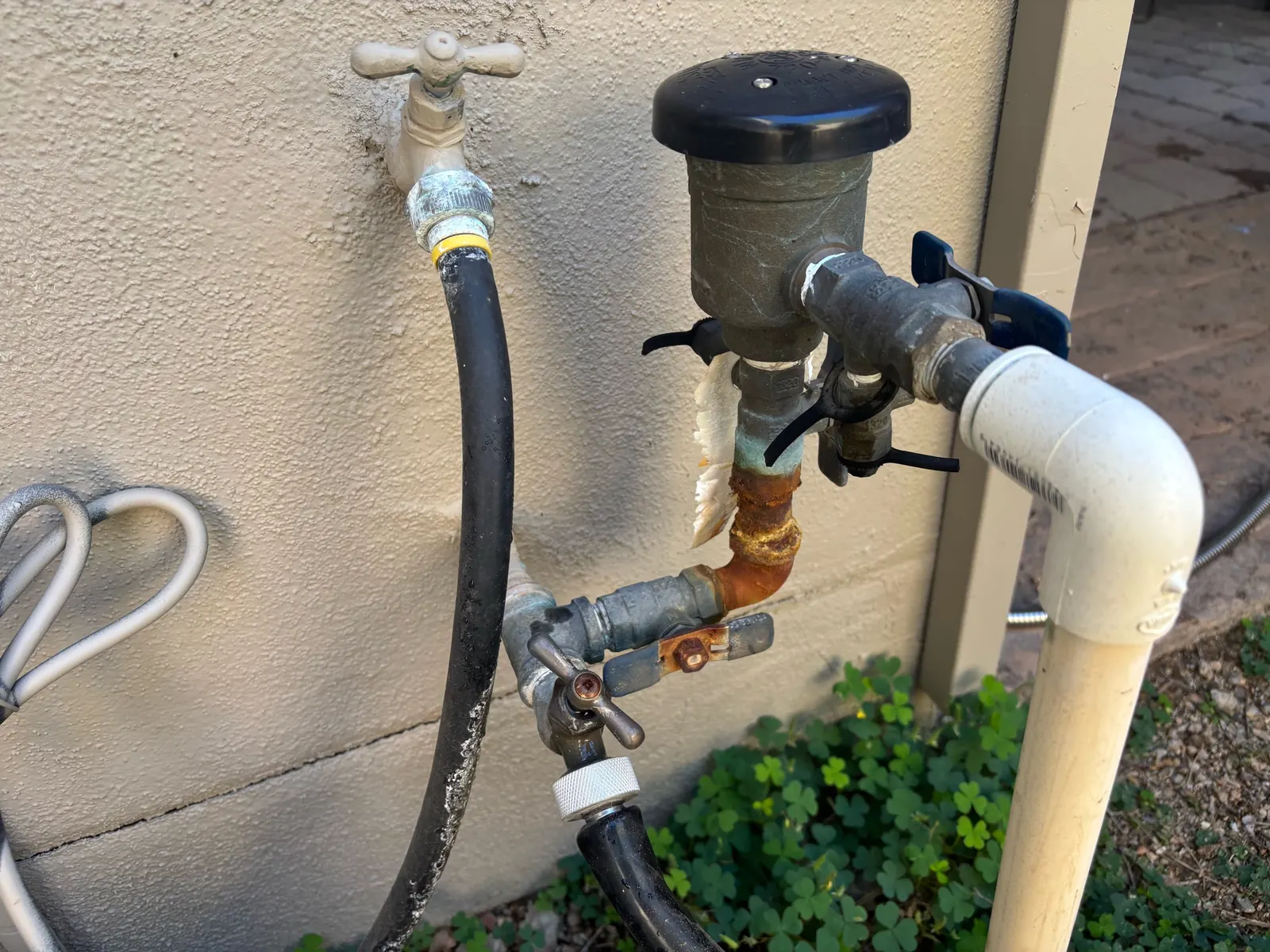
The two photos here come from one of Geo’s jobs. The old unit’s body was green with corrosion, and the copper riser under it was crusted over. Patching one part would have left the rest failing, so the whole assembly came out. Geo then put in a new brass PVB with fresh copper and brass fittings. You can see more jobs like this on our before and after projects page.
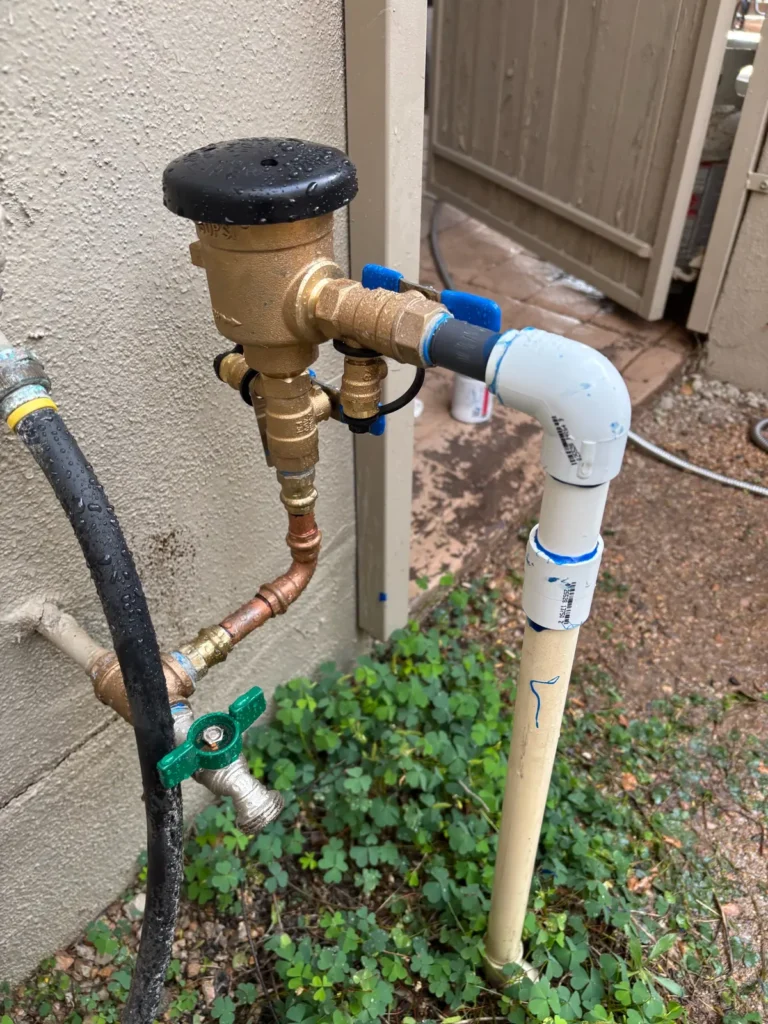
Whoever does the work, the new device should be the right size for the line, the right type for the hazard, and high enough above the heads. If your city requires the device, it will also want a test after installation.
Backflow preventer questions, answered
Does a home sprinkler system need a backflow preventer?
Yes. Code calls for backflow protection on lawn sprinkler and irrigation systems tied to your drinking water. The exemption only means your city usually won’t ask for a yearly test.
What does replacing an irrigation backflow preventer involve?
With the water off, you cut out the old unit, then thread or solder the new one in at the right height. If that work, or your city’s rules, feels like a stretch, hand it to a qualified plumber.
Will a new backflow preventer change my sprinkler pressure?
Every PVB causes a small pressure drop, but a correctly sized one shouldn’t be noticeable. If your zones were weak before, a stuck old valve may have been part of the reason. As a result, a new one may help.
Keep yard water in the yard
That riser by the side of the house rarely gets a second glance until it drips. Watch it run each season, cover it before a freeze, and replace it when the body or pipes are failing instead of patching around them. Geo repairs and replaces backflow devices across the Valley as part of his outdoor and household plumbing repairs. Schedule a backflow check online, and he’ll show you whether a rebuild kit will do or the unit should go.